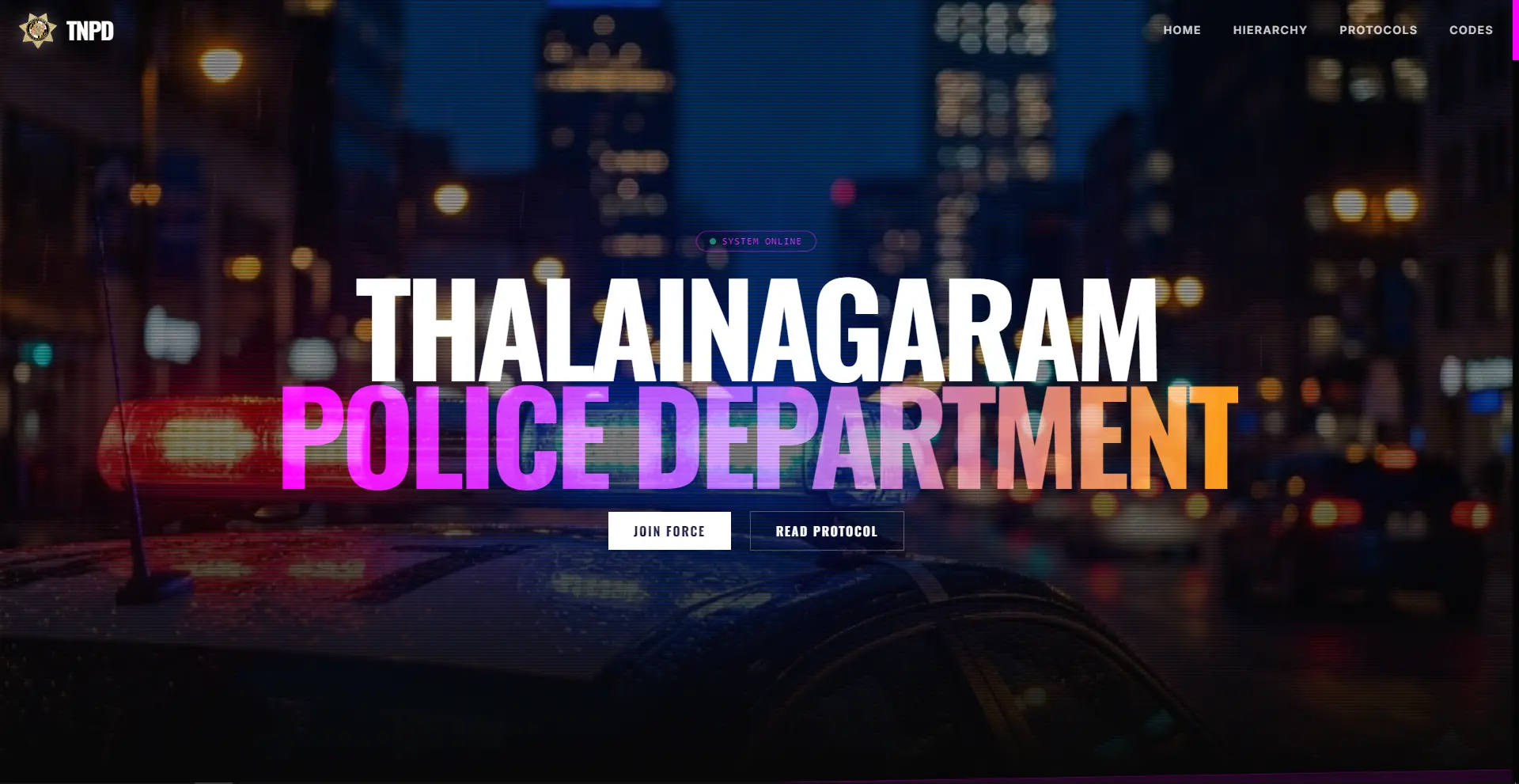
TNPD Community Hub
We built it for: Thalainagaram TNPD
Gaming Community Website Development: TNPD Community Hub Case Study
Gaming communities live and die by how fast their hub loads and how alive it feels once it does. TNPD's existing setup was neither, it was bloated, slow to load, and pushing away the exact players it was meant to keep engaged. Team Code was brought in to rebuild it from the ground up.
The Challenge: Bloat Was Costing Players
TNPD needed a centralized digital hub to display dynamic server statistics and community updates, but their existing solution worked against them:
- Heavy load times. Every extra second before the page rendered meant players bouncing before they saw anything.
- Bloated architecture. The existing setup wasn't built to handle dynamic data and heavy media assets without dragging performance down.
- High bounce rates. A community hub that's slow to load stops functioning as a hub at all.
The community needed a gaming community website development approach built around strict performance budgets from the very first line of code, not optimization bolted on afterward.
The Goal
Engineer a visually striking web application capable of handling heavy dynamic data and media assets without compromising on strict performance budgets.
The Solution: A Performance-First Frontend
Team Code built a performance-optimized frontend on React.js and Vite, using aggressive code splitting and modern bundling techniques to shatter the load time barriers the old setup couldn't get past.
Core Features
- Dynamic data visualization and stat tracking - a real-time data visualization web app showing live server stats without bogging down the page
- Aggressive code splitting and lazy loading - only the code a given view needs gets loaded, nothing more
- Responsive, gaming-focused UI/UX - designed around the community's identity, not a generic template
- Optimized asset delivery pipeline - heavy visual assets served without dragging load times down
Technology Stack
Built on React.js, Vite, Tailwind CSS, and Lighthouse CI, the stack was chosen specifically to keep performance auditing part of the workflow, not an afterthought bolted on before launch.
Our Development Process
- Performance budgeting and architecture planning - setting hard limits on load time and bundle size before any UI work started
- Component-level code splitting implementation - breaking the app into pieces that load on demand
- UI/UX development matching community branding - a community hub platform design that feels native to the server, not generic
- Rigorous Lighthouse performance auditing - validating every build against the performance budget, not just at the end
Key Challenges We Solved
Fast load times with heavy visual assets. Gaming communities expect a hub that looks as good as the game itself, but heavy visuals and dynamic community data on the client side are exactly what kills load times. We had to deliver both at once, not trade one for the other.
Fluid animations without the cost. Motion and interactivity matter for a community-focused UI, but poorly implemented animations trigger layout shifts and CPU bottlenecks, especially on lower-end devices players actually use. Every animation was built to stay smooth without becoming a performance tax.
Results
- Initial load time : < 2.0s
- Lighthouse score : 98
- Community scale : Tier 1
The Impact
This gaming community website development project delivered a centralized, lightning-fast hub for the TNPD community. What used to push players away with slow load times now establishes a premium digital footprint that's measurably boosted player retention and off-server engagement.
Why This Matters for Communities Considering a Performance Rebuild
Gaming communities often assume rich, dynamic content and fast load times are a trade-off, pick one or the other. This project shows that's a false choice. With the right architecture, a real-time data visualization web app can display live stats and heavy visuals while still hitting sub-2 second load times, because the performance budget was part of the plan from day one, not a fix applied after the fact.